La Grange Commuter Lifestyle: Walkability and Metra Access
May 28, 2026
May 28, 2026
If your weekday routine depends on an easy train ride into Chicago, not every suburb will feel the same once real life kicks in. You are probably not just asking whether a town has a Metra stop. You are asking whether you can actually walk to coffee, get to the platform without hassle, and manage parking without adding stress to your morning. In La Grange, those details matter, and they are a big part of why buyers keep this village on their shortlist. Let’s dive in.
La Grange sits about 13 miles west of downtown Chicago and packs a lot into a relatively compact footprint. Village materials describe it as walkable, with about 2.5 square miles of land area and an estimated 15,943 residents in 2024.
That size matters for buyers because it supports a more connected daily routine. Instead of needing to drive for every errand, many residents are close to the downtown core, the train, and everyday destinations. The village has also made transit access and walkability a clear planning priority, especially along the BNSF corridor.
La Grange has two Metra stations on the BNSF Line, both with service to Aurora and Chicago Union Station. The two stations are La Grange Road at 25 W. Burlington Rd. and LaGrange Stone Avenue at 701 W. Burlington Ave.
Both stations are in fare zone 3, both are listed as accessible, and both have ticket vending machines. Together, the village says the two stations serve nearly 5,000 passengers a day, which reinforces how central rail commuting is to life here.
For many buyers, La Grange Road is the most obvious fit if you want to live close to the center of town. Village planning materials describe it as being in the heart of downtown, and the station is one of the most heavily used suburban stops on the line based on village references to 2018 data.
From a lifestyle standpoint, this is the station that best matches downtown living. If you want to leave home on foot, grab coffee, run errands, or meet friends nearby after work, this location is usually the strongest match.
Metra also lists Pace routes 302 and 330 and Amtrak among the connecting services at La Grange Road. That does not make the village car-free, but it does add flexibility for people who want more than one transportation option.
Stone Avenue is the better rail anchor for the West End and nearby west-side blocks. Village materials describe it as serving the West End commercial area, and planning documents note passenger activity that is above average.
For buyers looking west of the downtown core, Stone Avenue can be the more practical station. In many cases, your day-to-day experience may come down less to which station is more popular and more to which one is easier to reach from your front door.
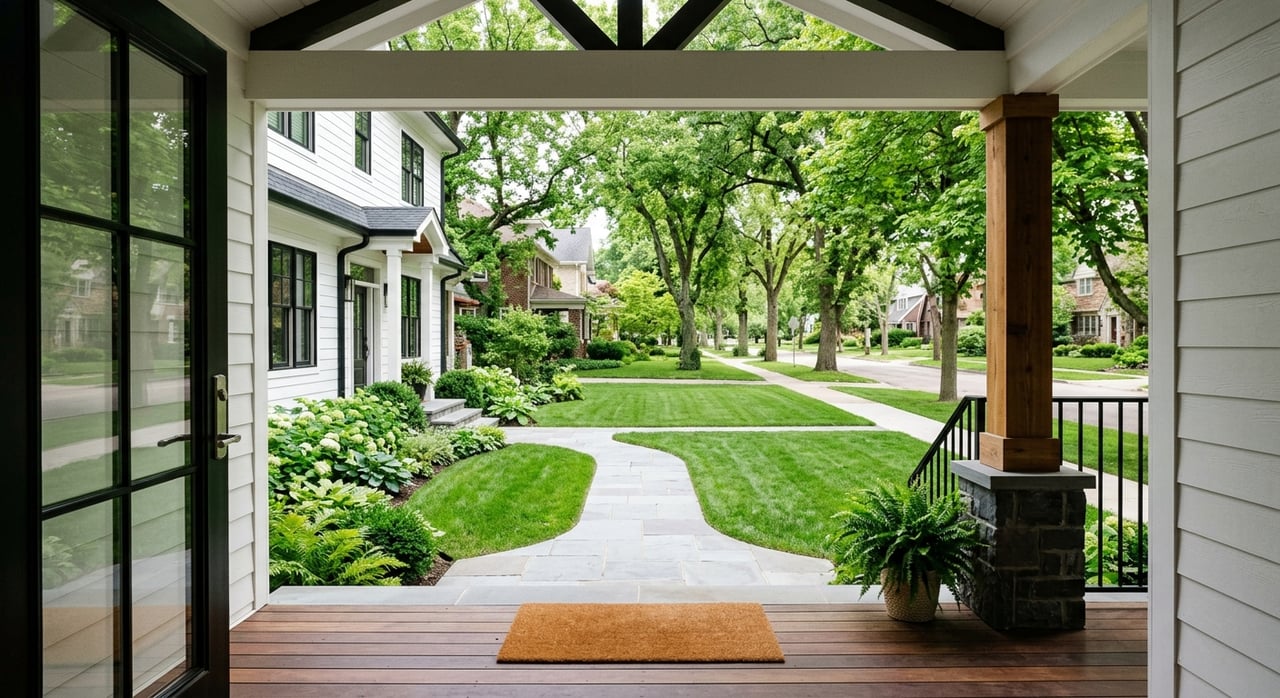
When people talk about La Grange being walkable, they are usually talking about more than sidewalks. They are talking about whether your daily routine can happen in a tighter, easier radius.
The village describes downtown as its historic core and says residents can shop, conduct business, visit a movie theater or library, and dine within walking distance of their homes. Another village page calls downtown the heart of the community, which matches how many buyers experience the area in person.
That is a meaningful advantage if you commute by train. A walkable environment can make the morning feel simpler and the return trip feel more convenient, especially when you can combine your commute with everyday errands or social plans.
Village planning documents treat roughly a quarter-mile around each Metra station as a key walkshed. In plain terms, that means homes closest to the La Grange Road and Stone Avenue station areas are likely to offer the strongest walk-to-train convenience.
That does not mean homes outside those areas are not appealing. It simply means the most commuter-friendly, on-foot setup is usually found near the downtown station area and the West End station area.
If you are choosing between locations in La Grange, it helps to think in terms of how you want your mornings and evenings to feel.
| Area | Best fit for | Key commuter advantage |
|---|---|---|
| Downtown near La Grange Road | Buyers who want the most central, walkable setup | Easy access to the heart of downtown and the station |
| West End near Stone Avenue | Buyers focused on west-side convenience | Strong access to Stone Avenue and the West End commercial area |
For some buyers, the answer is simple: be as close as possible to downtown. For others, a west-side block near Stone Avenue may offer the better balance of home style, lot, and station access.
Even in a rail-oriented suburb, parking is still part of commuter life. La Grange is highly functional for train riders, but it is not a place where you should assume parking will sort itself out.
The village manages commuter parking through decal-only zones and designated lots. It also maintains 300 parking meters along Burlington and Hillgrove Avenues, with meter parking enforced Monday through Friday from 6:00 a.m. to 6:00 p.m. Parking at meters is free on weekends and federal holidays.
Metra lists 412 parking spaces at La Grange Road and 501 spaces at Stone Avenue. Both stations include daily-only spaces and ADA stalls, and both show municipal parking contacts.
That is a substantial amount of parking, but it is still finite. If you expect to drive to the train most days, it is smart to understand the lot setup and local rules before you buy, not after.
Overnight street parking in La Grange is generally prohibited from 2:00 a.m. to 6:00 a.m. That can affect your routine if you have multiple cars, frequent guests, or a property with limited off-street parking.
The village also says residents in the central business district need a decal to park overnight downtown. Eligible downtown residents can apply for residential parking decals within the restricted downtown area.
A walkable commuter town brings energy, but it also brings movement. The village’s own safety messaging notes that La Grange is known for its vibrant downtown, walkability, and convenient rail access, which creates a daily mix of vehicle, cyclist, and pedestrian traffic.
For you as a buyer, that means street activity is part of the experience. In the right location, that can feel lively and convenient, but it also means pedestrian comfort, crossings, and traffic flow are practical parts of evaluating a block.
If commuting is one of your top priorities, it helps to evaluate La Grange with a very practical lens. Here are a few questions worth asking as you compare homes:
These are the details that often shape long-term satisfaction. Two homes may be similar on paper, but their day-to-day convenience can feel very different depending on station proximity and parking logistics.
If you are selling in La Grange, commuter convenience is a real location strength. Buyers paying attention to this market often care deeply about train access, walkability, and the ease of daily life.
That means your marketing should clearly communicate the home’s relationship to La Grange Road, Stone Avenue, downtown, or the West End. If a buyer can picture an easier morning routine from your address, that can add meaningful appeal.
La Grange stands out because it offers more than a train stop. It offers a compact, walkable setting with two active BNSF stations, a downtown core that supports daily errands on foot, and a built-in commuter rhythm that shapes how people live here.
At the same time, it is important to go in with clear expectations. Parking rules, decal requirements, and station geography still matter, and the best fit often comes down to whether you want to be near downtown La Grange Road or closer to Stone Avenue and the West End.
If you are weighing a move to La Grange or preparing to sell a home that benefits from commuter access, working with a local advisor can help you focus on the details that truly affect value and lifestyle. To talk through La Grange block by block, schedule your complimentary market consultation with Deidre Rudich.
Stay up to date on the latest real estate trends.
Whether you're seeking expert guidance on the market trends, property valuations, or specific neighborhoods, Deidre is ready to provide you with tailored solutions and personalized support. Send her a message through the contact form below, and she will be with you every step of the way.