Clarendon Hills Has Two Housing Markets Hiding Inside One Median
October 1, 2026
October 1, 2026
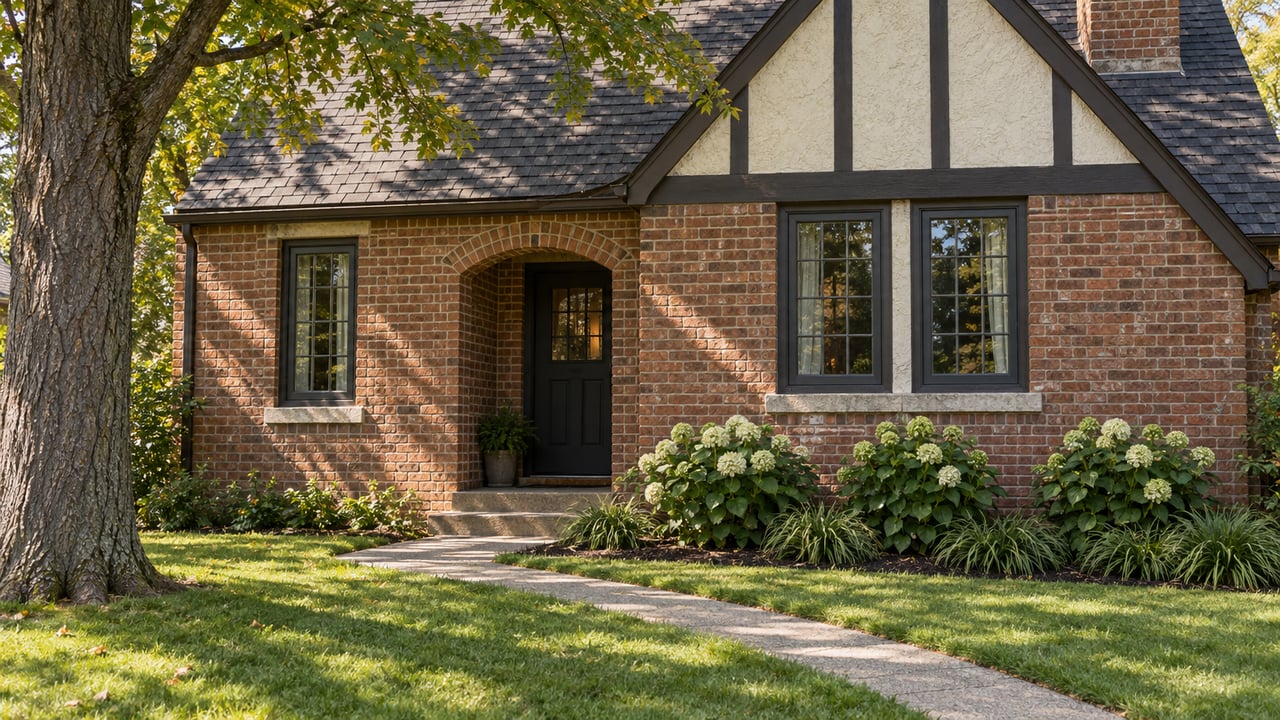
A buyer working from the "Clarendon Hills median" pulls up the number, sets a search filter around it, and finds almost nothing. Not because inventory is thin, though it is. Because the homes clustered near that number belong to two entirely different products that happen to share a zip code, and neither one actually sits at the median. One is a 1950s cape cod two blocks from downtown. The other is a 5,200-square-foot modern farmhouse built on a lot that used to hold something smaller. The median reflects both. It describes neither.
That gap matters more than it looks like it should for anyone comparing Clarendon Hills against Hinsdale, La Grange, or Western Springs using portal numbers alone. The headline figure isn't wrong. It's just not describing a house you can walk into.
Track Clarendon Hills' reported median across 2026 and it refuses to hold a lane. In December 2025, one MLS-based tracker put the median sale price at $750,000, with only 13 homes on the market and just 6 new listings that month, homes moving in about 41 days at roughly 101% of asking. By June 2026, a different tracker reported a median of $612,500, while the average sale price for the same window sat at $805,198, a gap of nearly $193,000 between the typical sale and the mean. A month later, in July 2026, another source put the median list price at $767,000, with a per-square-foot figure of $352. By August 2026, a broader median covering all home types (condos, townhomes, and detached houses combined) landed at $799,471, almost flat year over year.
None of this is measurement error. Each of these figures is measuring a slightly different slice of the same small village, and the slice changes what number comes out. Detached single-family homes alone have recently averaged around $801,000, while condos in the village have traded closer to $289,000. Fold condos into the sample and the median drops. Pull them out and look only at new construction closings and it jumps past $1 million. The number moves because the underlying product moves.
Part of why the split holds together goes back to how Clarendon Hills was laid out. The village was designed with curved, contour-following streets influenced by Frederick Law Olmsted and incorporated in 1924, a footprint that still runs under two square miles. That kind of early streetcar-suburb platting produced small, sometimes irregular lots built for cottages and Cape Cods, not the wide, squared-off parcels a 5,000-square-foot farmhouse wants.
That constraint shows up directly in how local builders talk about the market. Overstreet Builders markets Clarendon Hills specifically around "teardown and infill opportunities with narrower lot dimensions that benefit from intentional, thoughtful design," which is a way of saying the lots here are tighter than a typical rebuild market and the floor plans have to work around that. Citadel Homes, a local builder active in the village, recently completed a roughly 5,200-square-foot modern farmhouse within walking distance of downtown, the Metra, and Prospect Elementary. A separate new-construction listing the same year sat on a 12,230-square-foot lot, a size and shape combination that isn't available on every original parcel in the village.
Where the lot allows it, the rebuild happens. Where it doesn't, the original house stays, sometimes with a new roof and refinished floors, sometimes with additions layered on over decades. A cape cod at 334 55th Street recently listed on a 100-by-231-foot lot, unusually deep for the village, while a brick ranch in the Blackhawk Heights subdivision listed with its original four-bedroom, one-bath layout intact on an oversized, fenced lot. Both are original stock. Neither has been touched by a rebuild, because the math for a rebuild depends on lot geometry the whole village doesn't share equally.
| Original stock (1920s-1950s) | New construction / rebuilds | |
|---|---|---|
| Typical size | 900 to 2,300 sq ft | 3,200 to 5,200+ sq ft |
| Typical lot | Original platted lot, often irregular | Assembled or regraded, wider frontage |
| Example | Cape Cod near Walker Elementary, 2,276 sq ft across four finished levels | Citadel Homes farmhouse near downtown and Prospect Elementary, ~5,200 sq ft |
| Recent price context | Median figures in the $605,000 to $650,000 range across 2026 trackers | Village listings have topped out near $2,649,000 this year |
The new-construction wave isn't limited to single-family teardowns either. Parkside Luxury Residences, a six-unit townhome development facing Park Avenue Park, is adding attached new-construction product into the same walk-to-town streets where original cottages still sit, which means even "new construction in Clarendon Hills" no longer means one thing.
In a larger suburb with a thousand annual closings, a few outlier sales barely move the median. Clarendon Hills doesn't have that cushion. With only a handful of homes closing in any given month, one or two high-end new builds can pull the average sharply upward without changing what the typical original-stock house actually sold for, and one month with more starter-cottage turnover can pull the median down without signaling any softening in the new-construction segment. The volatility in the reported numbers from month to month isn't noise to filter out. It's the clearest evidence that this is a bimodal market being described with numbers built for a market that clusters around a single center.
For a buyer, that means the first useful question isn't "what's the median in Clarendon Hills" but "which segment am I actually comparing against." A listing at $650,000 and a listing at $1.9 million may both appear in the same market, but they aren't competing for the same buyer, and they aren't proxies for each other.
For a seller with an original cottage, it means benchmarking against a rebuild's price per square foot will overstate what the lot and structure can support unless the lot itself has rebuild potential. For a seller sitting on a wide, rebuild-eligible parcel, the opposite is true: comparing against original-stock sales on narrow lots will understate what the site is actually worth to a builder.
The village's schools sit on top of both segments without sorting by price. Most of Clarendon Hills feeds into Community Consolidated School District 181, split between Prospect Elementary and Walker Elementary before Clarendon Hills Middle School, with the majority of the village continuing on to Hinsdale Central High School through Hinsdale Township High School District 86. That consistency is one reason the two housing products can coexist on the same streets rather than sorting into separate neighborhoods. A buyer isn't trading school access for house type. They're choosing between two very different structures that happen to share the same public schools, the same Metra platform, and the same walk to town.
Is a lower Clarendon Hills median a sign this is the "affordable" alternative to Hinsdale? Partly, but not because the housing is lesser. Hinsdale's own median sits well north of $1 million, and Clarendon Hills' lower blended number reflects the share of original 900-to-2,300-square-foot homes still standing on lots too narrow or too shallow for a rebuild, not a discount on the same product.
Will the older housing stock eventually disappear as more lots get rebuilt? Not evenly. The village's original platting means some lots simply don't pencil out for a builder the way a wider parcel near the golf course frontage does. Expect the two segments to keep coexisting rather than one converting fully into the other.
If you're weighing an original cottage against a rebuild-eligible lot in Clarendon Hills, or trying to figure out which segment a specific address actually belongs to, that's a conversation worth having before you set a search filter around a number that may not describe either one. Deidre Rudich can walk you through what a given lot and structure are actually worth in this market. Schedule your complimentary market consultation.
Stay up to date on the latest real estate trends.
Whether you're seeking expert guidance on the market trends, property valuations, or specific neighborhoods, Deidre is ready to provide you with tailored solutions and personalized support. Send her a message through the contact form below, and she will be with you every step of the way.